
The Real Risks of Online Aligners Like SmileDirectClub and Byte

Online clear aligners like SmileDirectClub, Byte, AlignerCo, and NewSmile are often marketed as cheaper, easier replacements for Invisalign, but the risks of unsupervised aligner treatment are not always part of the pitch. At Weiler Orthodontics in Harrisonburg, Virginia, patients regularly ask how direct-to-consumer (DTC) aligners compare to supervised Invisalign and whether they are actually safe. Let’s walk through what major dental and orthodontic organizations have published about DTC clear aligners so you can weigh the decision with the full picture in front of you.
Why Online Aligners Are Not the Same as Supervised Treatment
DTC clear aligners, also called mail-order or at-home aligners, are designed to be used without ongoing in-office supervision. After a do-it-yourself impression kit or a brief in-store scan, your aligners are produced and shipped, and you wear them without ongoing check-ins from a licensed clinician. Traditional orthodontic care works differently. Before Invisalign or braces are placed, an orthodontist looks at the condition of your teeth, gums, bone, and bite during a clinical exam. That step is what keeps the treatment safe. It catches anything that might affect how your teeth move and it gives your orthodontist a reference point to compare against as treatment goes on.
What the ADA, AAO, and NIH Say About Online Aligners
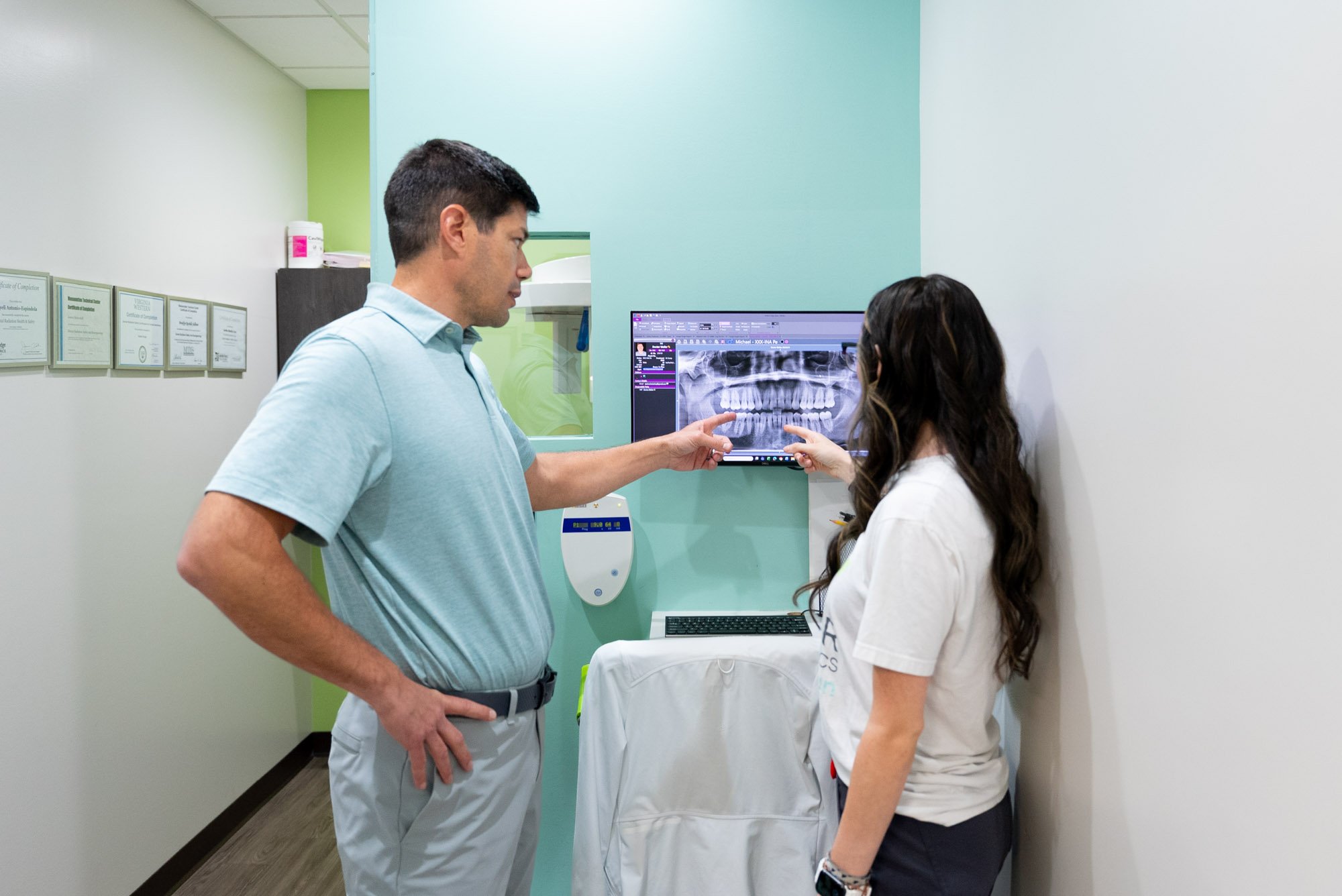
The American Dental Association (ADA) has publicly opposed DTC dentistry, noting that patients in these models can be treated more like customers than patients, and that working without a hands-on dental evaluation introduces the possibility of lasting harm to bone, gum tissue, and the bite.
The American Association of Orthodontists (AAO) has tracked this from inside its members’ offices. In a survey of practicing orthodontists, roughly three in four reported seeing patients return for follow-up care after attempting mail-order treatment without an initial in-person exam.
A review summarized by the National Institutes of Health (NIH) reached a similar conclusion. When sequential aligners are used without oversight from a licensed dental professional, the most commonly reported side effects include changes to the bite, ongoing discomfort, tooth sensitivity, and gum disease.
Why Orthodontist Supervision Matters for Invisalign and Clear Aligners
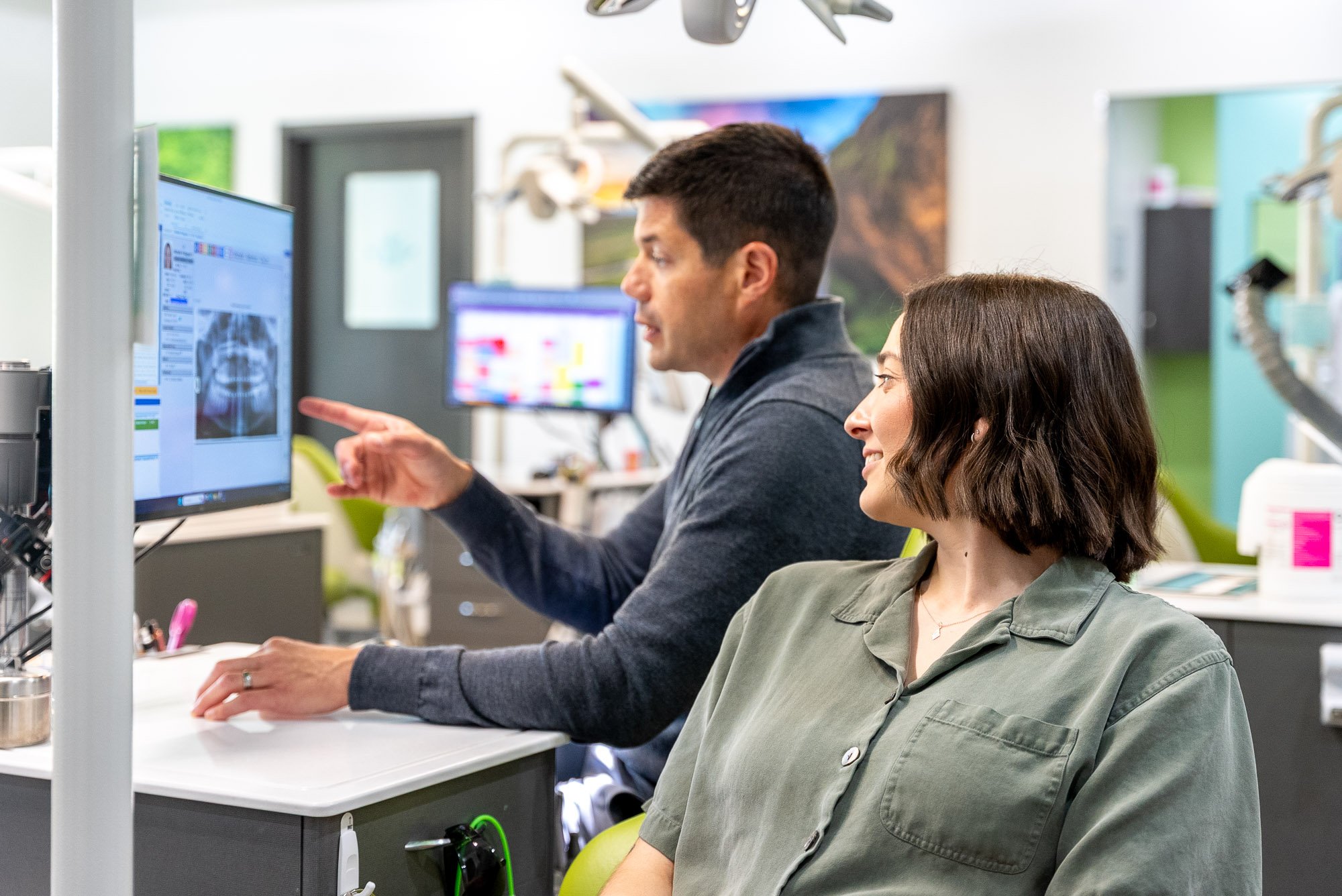
Tooth movement is a biological process, not just a cosmetic adjustment. Aligners apply force, and that force needs to land on healthy bone and healthy gum tissue. Without an exam, issues that affect how your teeth should move, like undiagnosed gum disease, a hidden cavity, or a bite that the front teeth alone cannot fix, can go unnoticed until the result is harder to reverse.
Invisalign treatment at Weiler Orthodontics is built around that supervision. It starts with a free consultation with a licensed orthodontist in Harrisonburg, Virginia, where Dr. Weiler reviews your teeth, gums, bone, and bite, and your Invisalign plan is built from a 3D scan of your actual mouth. Treatment involves clear aligners along with small tooth-colored attachments bonded to your teeth to help guide movement precisely. Progress is checked in person so the plan can adapt as your teeth respond, and retainers help protect the result once treatment wraps.
If You’ve Already Used SmileDirectClub, Byte, or Another Online Aligner
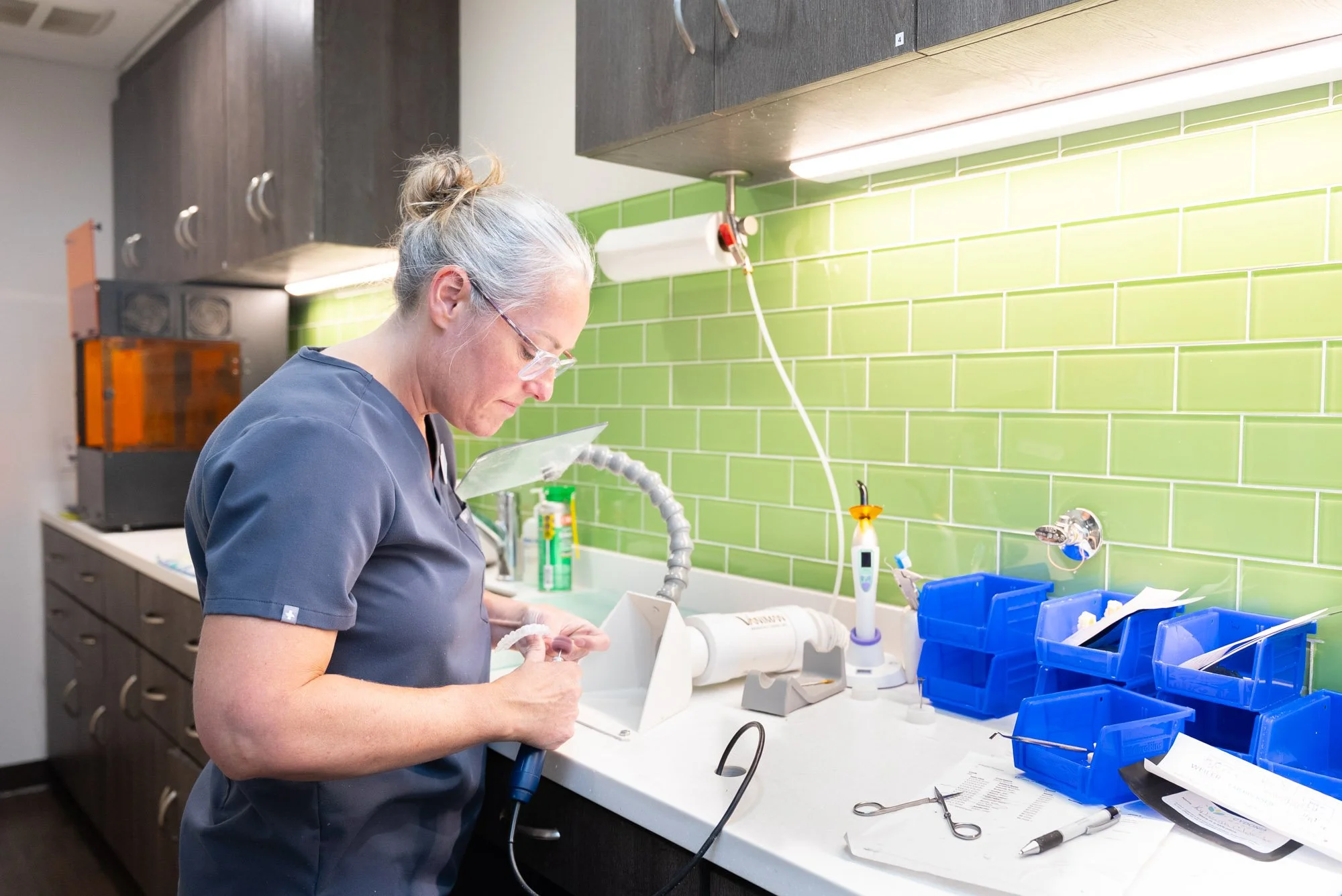
If you have already used SmileDirectClub, Byte, or another mail-order aligner, scheduling an in-person exam is a smart next step no matter how your treatment ended. Sometimes a retainer is all that is needed to stabilize the result. Other times, braces or supervised Invisalign can pick up where the at-home treatment left off.
Considering Invisalign or Clear Aligners in Harrisonburg, VA?
If you are weighing Invisalign or other clear aligner options in Harrisonburg, a free consultation gives you the information without the commitment. Weiler Orthodontics works with patients of all ages across Harrisonburg, Rockingham County, and the Shenandoah Valley.
Schedule your free consultation today at Weiler Orthodontics and Invisalign in Harrisonburg, Virginia.
Frequently Asked Questions
-
The ADA, AAO, and NIH have all published concerns about mail-order aligner systems, mostly because treatment is not preceded by an in-person clinical exam. The risk is not the aligner itself, but moving teeth without a clinician evaluating whether your mouth is healthy enough to move them.
-
Invisalign is prescribed by a licensed orthodontist after a full in-person exam, planned from a 3D scan, and monitored throughout treatment. It also uses small tooth-colored attachments bonded to your teeth to help guide movement, something DTC systems do not include. Most DTC systems rely on at-home impressions and minimal in-person oversight.
-
An in-person exam is what lets your orthodontist plan treatment around your actual mouth instead of a set of photos. It checks the things that affect how teeth can move, including gum health, bone support, untreated cavities, and bite alignment, so the plan is built on the full picture of your oral health.
-
The upfront price is often lower for DTC aligners, but the total cost can shift if follow-up care is needed later. Weiler Orthodontics offers flexible payment plans with no interest, and consultations are free.
-
You can book a free consultation through our online scheduling page. You can also see what to expect at your first visit before you come in.
